


PLANNING UPDATE for Proposed Boundary Expansions at 10 National Wildlife Refuges in Coastal Georgia and South Carolina Lowcountry at the Savannah Coastal Refuges Complex and South Carolina Lowcountry Refuges Complex.
Highlights of the Proposal:
- Hunting and other permitted recreational uses would continue on existing public recreational areas, including state Wildlife Management Areas under jurisdictions of the states. The Service is not seeking to manage those existing public conservation areas; the Service is seeking to add lands to the existing conservation network in this important landscape.
- The proposal would not affect state navigable waters; fishing and boating would continue on those waters under state regulations.
- Being included within the proposed boundary expansion area would not affect how owners use their property or to whom they may choose to sell their property. The boundary expansion simply allows the Service to acquire lands that meet our conservation priorities through purchase from willing sellers or donations.
- If finalized, the proposal would conserve about 10% of the outlined Conceptual Focus Areas, aligning with Georgia and South Carolina goals, both State Wildlife Action Plans, and the Southeast Conservation Blueprint. Implementation of the proposed expansions could take many decades.
- The Service's policy is to work with willing sellers.
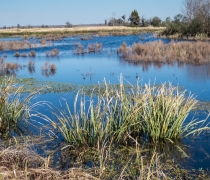
U.S. Fish and Wildlife Service Proposes Major Boundary Expansions for National Wildlife Refuges in Coastal Georgia and South Carolina Lowcountry at the Savannah Coastal Refuges Complex and South Carolina Lowcountry Refuges Complex. Click here to learn more.
Dogs and other domestic pets are not allowed on refuge lands, including all trails and beaches. This is especially important on the beaches of Wassaw and Blackbeard Island NWRs to protect declining shorebird and seabird populations that rely on these areas for survival. In addition to the potential for disturbance to wildlife and other visitors, dogs are easy prey for American alligators which are abundant on all refuges in the Complex. You may have your pet while driving the wildlife drives at Savannah and Harris Neck NWRs, but they are not allowed to leave your vehicle.
Harris Neck NWR will be closed Thursday 10/1, Friday 10/2, and Saturday 10/3 for the first of two annual managed deer hunts. Only hunters with a refuge hunt permit will be allowed entry. The entrance gate will close at sunset on Thursday 9/30 and remain closed throughout the hunt. It will reopen at sunrise on Sunday 10/4.
Visit Us
National wildlife refuges offer us all a chance to unplug from the stresses of daily life and reconnect with our natural surroundings. Harris Neck National Wildlife Refuge offers a variety of opportunities to explore and enjoy the great outdoors from sunrise to sunset every day. You can observe and photograph wildlife, fish, or during the season, hunt white-tailed deer.
Harris Neck NWR, including the 4-mile wildlife drive, is open daily from sunrise to sunset. Due to staffing cuts, the Visitor Contact station is closed until further notice.
Activities
A number of wildlife-dependent recreational opportunities are available to refuge visitors year-round including hiking, bicycling, wildlife observation and photography, fishing, and hunting during specified seasons.
Related Documents
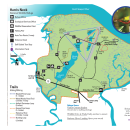
Other Facilities in the Complex
Harris Neck NWR is one of seven refuges administered by the Savannah Coastal Refuges Complex which is headquartered at the Savannah NWR Visitor Center located in Hardeeville, South Carolina.



Rules and Policies
There are many fun and interesting things to do and see during your visit to Harris Neck National Wildlife Refuge, but it is our job to ensure the habitat that our wildlife calls "home" is protected. Below are a few guidelines to help keep both visitors and wildlife safe.
- The refuge is open during daylight hours only; overnight use and/or camping (including campfires) are not permitted.
- Some areas may be closed seasonally to protect wildlife from human disturbance. Such areas are posted "Area Beyond This Sign Closed."
- Feeding, capturing, or harassing wildlife is strictly prohibited unless authorized by permit.
- Launching, landing, or disturbing of wildlife by aircraft (drones) on the refuge is prohibited.
- Dogs, cats, and other pets are not permitted on the refuge unless confined inside a vehicle.
- Picking or cutting vegetation is prohibited.
- All of the refuge's archaeological and natural resources are protected. Artifact hunting/collecting is not allowed.
- Automobiles must remain on the wildlife drive. Hikers and bicyclers are encouraged to stay on marked trails.
- Saltwater fishing and shellfishing are permitted in refuge tidal waters only.
- All freshwater ponds are closed to fishing.
- The refuge, unless otherwise posted, is open to hiking, biking, wildlife observation, interpretation, environmental education, and photography. It is also open, in certain areas and times of the year, to hunting and fishing; review refuge hunting and fishing regulations for details.
Locations
Harris Neck NWR is located just seven miles off of I-95 (Exit 67-South Newport) in McIntosh County, Georgia.
From I-95, take Exit 67 (South Newport) and turn south onto U.S. Highway 17, towards Darien/Brunswick. In less than a mile, turn left onto Harris Neck Road (just past the Smallest Church in America). Continue on Harris Neck Road for approximately 7 miles to the refuge entrance on your left.